


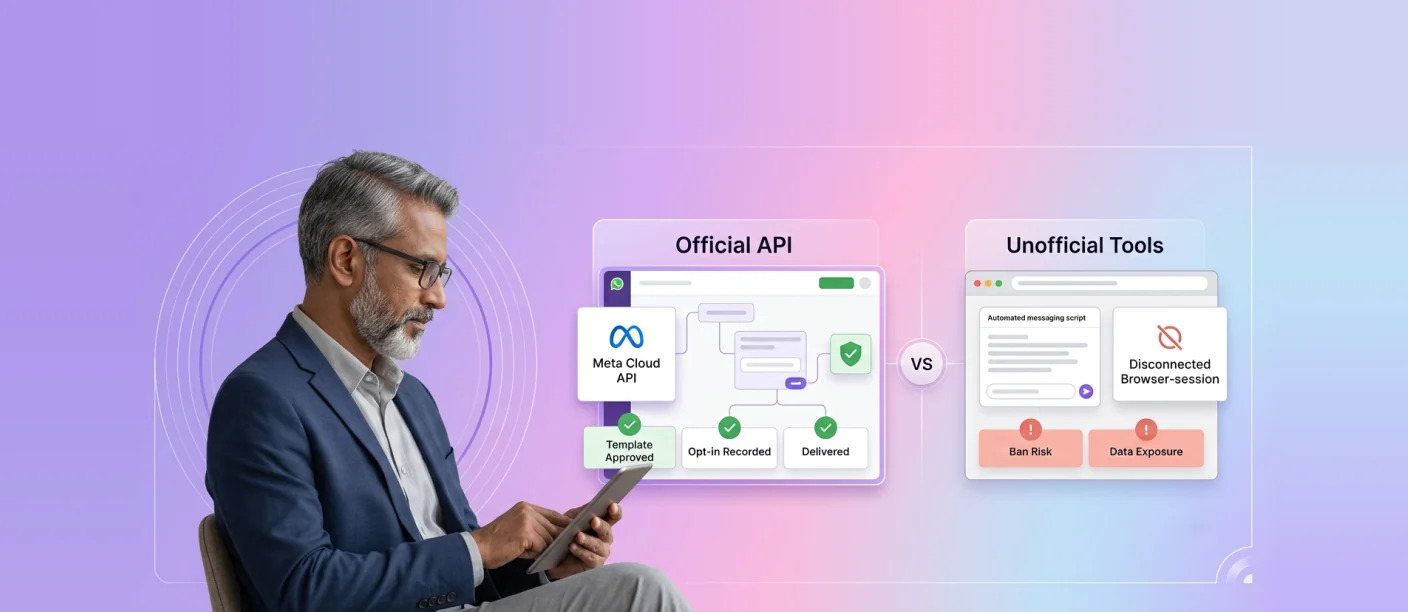
The Meta WhatsApp API, officially part of the WhatsApp Business Platform, is the only sanctioned way for businesses to send automated and high-volume WhatsApp messages. It is owned and governed by Meta, accessed through the Cloud API either directly or via an approved partner, and backed by template approvals, opt-in rules and delivery reporting. Unofficial tools that automate WhatsApp Web or the consumer app operate outside Meta’s terms and put your number, data and brand at risk.
This guide is for IT heads, marketing ops and procurement teams evaluating low-cost “WhatsApp API” or bulk-sending tools. If you’re still deciding whether you need the API at all, start with our comparison of the WhatsApp Business App vs Platform (peer link). Smartping is a Meta Business Partner offering the official WhatsApp Business API from Smartping, and our WhatsApp Business API complete guide covers the platform in depth.
What Is the Official Meta WhatsApp API?
The official Meta WhatsApp API is the programmable interface to the WhatsApp Business Platform, owned and operated by Meta. Businesses access it through Meta’s Cloud API, either directly or through a Meta Business Partner that handles onboarding, tooling and support.
Key characteristics of the official API:
1. Owned by Meta: Infrastructure, policies and message delivery are controlled by Meta.
2. Hosted on Meta’s Cloud API: Meta hosts the messaging infrastructure, so businesses do not run WhatsApp servers themselves.
3. Tied to a verified business: Each WhatsApp Business Account (WABA) is linked to a business portfolio, with business verification required for higher messaging limits.
4. Template-based outreach: Business-initiated messages use pre-approved templates in marketing, utility or authentication categories.
5. Consent-led: Businesses must have customer opt-in before sending business-initiated messages.
Unofficial WhatsApp Tools Explained
Unofficial tools promise “WhatsApp API” functionality without going through Meta. They generally fall into a few groups:
WhatsApp Web API scrapers. These automate the WhatsApp Web interface in a browser session, simulating a human clicking and typing to send messages.
WAHA-style libraries. WAHA (WhatsApp HTTP API) and similar open-source projects wrap a WhatsApp Web session in an HTTP API, so developers can send messages programmatically. They are self-hosted and not affiliated with Meta.
Bulk senders and spam bots. Desktop tools or extensions that push large message volumes from regular or Business app numbers, often rotating multiple SIMs to avoid detection.
Why they’re cheap: They skip everything the official API requires, including business verification, template review, opt-in enforcement and Meta’s per-message billing. That saving comes from bypassing the rules, not from better technology.
The Real Risks of Unofficial Tools
Number bans. WhatsApp actively detects automated and bulk behaviour on non-API numbers. A ban can remove your business number, along with its contact base and chat history, without warning or appeal.
Broken delivery. Unofficial tools break whenever WhatsApp updates its web or mobile clients. There are no delivery webhooks or service guarantees, so campaigns can silently fail.
Data exposure. Session-based tools often store login sessions, contacts and message content on third-party servers or local machines with no clear security controls.
No verification path. Unofficial numbers cannot access official business account status, higher messaging tiers or features like catalogs, Flows and Click-to-WhatsApp ad integration.
DPDP Act liability. Under India’s Digital Personal Data Protection Act, 2023, businesses are accountable for how they collect and process personal data, including consent. Messaging people without verifiable consent, or routing customer data through unvetted tools, increases regulatory exposure. Businesses should take legal advice on their specific obligations.
The safer route for volume outreach is compliant WhatsApp bulk messaging (peer link) through the official API, with controls such as marketing pauses and template safeguards. Our guide on controlling WhatsApp marketing sends shows how these work in practice.
How Do Third Parties Implement the WhatsApp Business API Legitimately?
Legitimate third parties are part of the Meta Business Partner programme for business messaging. They build on Meta’s WhatsApp Cloud API (peer link) and add onboarding, dashboards, integrations and support. Two partner models matter most:
| Solution Partner | Tech Provider | |
|---|---|---|
| Role | Full-service partner offering onboarding, platform, support and billing | Technology layer built on the Cloud API |
| Who bills you for messaging | Can bill you directly, consolidating Meta charges with platform fees | You typically pay Meta directly for messaging |
| Onboarding | Guides business verification and number setup | Uses Meta’s embedded signup flow |
| Support | Direct escalation routes to Meta | Varies by provider |
Who owns the WABA? In a legitimate setup, the WhatsApp Business Account belongs to your business portfolio. The partner is granted access to manage it. This means you retain ownership of your number, templates and quality history if you ever change providers. If a vendor insists on holding the account in its own name, treat it as a red flag.
5-Question Test: Is Your WhatsApp Tool Official?
Ask any vendor these five questions before signing:
1. Are you a listed Meta Business Partner?
Check the vendor in Meta’s official partner directory rather than relying on logos on their website.
2. Who owns the WhatsApp Business Account?
The WABA should sit in your business portfolio, with the vendor added as a partner.
3. Are templates submitted to Meta for approval?
Official business-initiated messages require approved templates. If a tool lets you send any promotional text to anyone instantly, it is not using the official API.
4. Do you provide delivery webhooks and status reporting?
The official API returns sent, delivered, read and failed statuses. Unofficial tools usually cannot.
5. What opt-in tooling do you provide?
Official providers help you collect, store and manage customer consent.
If the answer to any of these is unclear, the tool is likely unofficial.
Not sure where your current setup stands? Request a free WhatsApp compliance audit by contacting Smartping’s experts.
Migrating From an Unofficial Tool Without Losing Your Audience
Moving to the official API is less disruptive when planned in stages:
Re-collect opt-ins. Contacts gathered through unofficial tools may not have valid consent. Re-permission your audience through website forms, checkout pages, QR codes, Click-to-WhatsApp ads or a utility-led first message where a genuine relationship exists.
Decide your number strategy. If your current number is healthy and not banned, it may be possible to migrate it to the official API. If it has been flagged or used for bulk spam, starting with a fresh number protects your future quality rating.
Clean your contact list. Remove unverified, purchased or inactive contacts before launch. A smaller, consented audience delivers better quality ratings than a large unverified list.
Rebuild templates properly. Convert your common messages into approved marketing, utility and authentication templates.
Switch off the old tool fully. Running unofficial and official sending in parallel risks the quality rating of your new setup.
Frequently Asked Questions
Is WAHA an official WhatsApp API?
No. WAHA is an open-source, self-hosted tool that wraps a WhatsApp Web session in an HTTP API. It is not developed, approved or supported by Meta.
Will WhatsApp ban my number for bulk sending?
Numbers used for automated or bulk messaging outside the official API are at risk of being banned. The official API is designed for high-volume messaging, with tiered limits that grow as your quality and verification improve.
Is the official API more expensive?
The official API involves Meta’s messaging charges and provider fees, while unofficial tools appear cheaper upfront. That comparison ignores the cost of a banned number, lost contacts, failed campaigns and compliance exposure, which unofficial tools do not protect against.
How do third parties implement the WhatsApp Business API?
Approved Meta Business Partners build on Meta’s Cloud API, providing onboarding, dashboards, integrations and support, while the WhatsApp Business Account remains owned by the business.
What is the difference between the WhatsApp Web API and the official API?
“WhatsApp Web API” usually refers to unofficial automation of the WhatsApp Web client. The official API is Meta’s Cloud API, built for businesses and governed by Meta’s policies.
Choose the Official Route
Cheap WhatsApp tools trade short-term savings for long-term risk to your number, data and reputation. The official Meta WhatsApp API gives you verified identity, approved templates, consent management and reliable delivery, all on infrastructure Meta stands behind.
To build campaigns on that foundation, explore Smartping’s WhatsApp marketing platform (peer link) capabilities, or talk to our experts about moving to the official API.