India
India
 Singapore
How Can Retailers Use WhatsApp In-Chat Payments to Reduce Festive Checkout Drop-Off?
-
 By Smartping
- Oct 09, 2026
- WABA
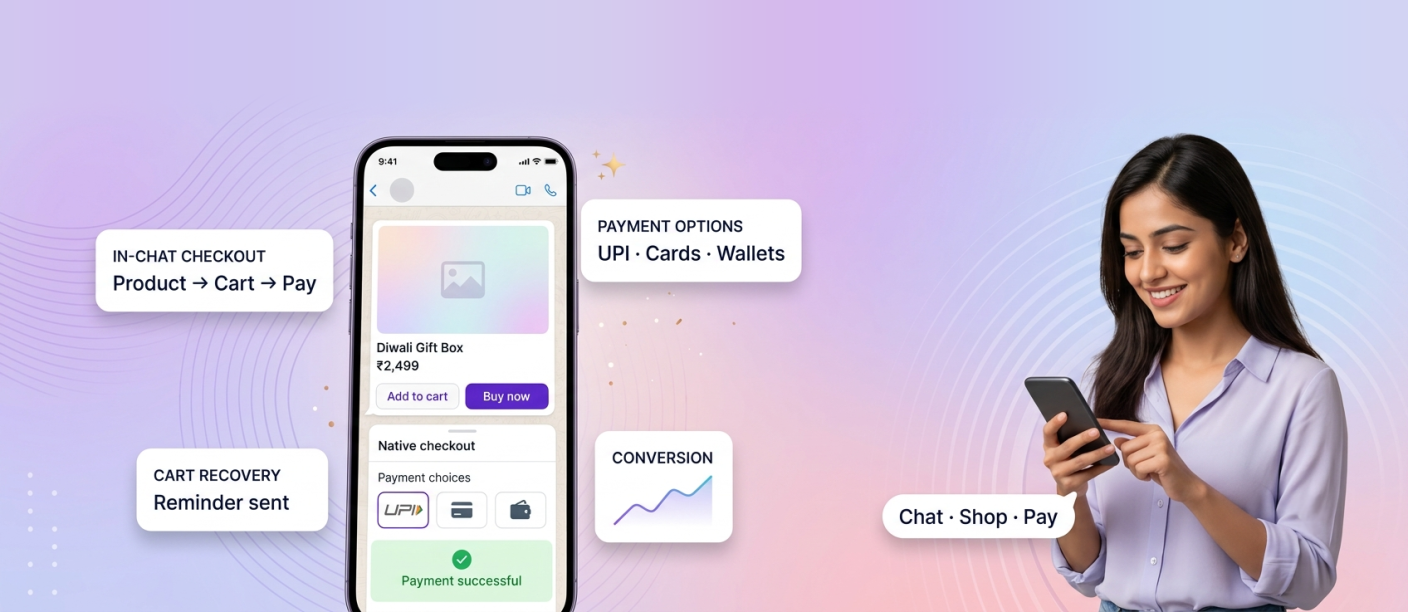
WhatsApp in-chat payments improve festive checkout by letting shoppers pay through UPI, cards, net banking or wallets without leaving the conversation where they discovered the product. Every redirect to an external page, app or payment gateway adds a moment where a high-intent buyer can drop off. During festive sales, when traffic spikes and attention is scattered across dozens of offers, removing those moments is one of the most direct ways to protect conversions.
This guide breaks down where payment friction appears after product discovery, how in-chat payments keep the purchase inside WhatsApp, and how retailers can use Smartping’s WhatsApp Business Messaging to build a faster festive checkout.
Where Festive Checkout Drop-Off Actually Happens
Most retail teams invest heavily in getting shoppers to the product. The leakage tends to happen after that, in the steps between “I want this” and “payment confirmed.”
The redirect gap. A shopper browses a catalog or carousel on WhatsApp, taps “Buy,” and lands on a mobile website. The page loads slowly under festive traffic, the cart has reset, or the shopper has to log in again. Each of these is a reason to abandon.
The app-switch gap. Moving from WhatsApp to a browser, then to a UPI app, then back again breaks focus. On mobile, every switch is an opportunity for a notification, a competing offer or simple distraction to win.
The form-fill gap. Re-entering name, phone number and address on a checkout page the shopper has never used before slows things down, especially on small screens.
The trust gap. Unfamiliar payment pages during sale season can raise doubts about whether a link is genuine, particularly when shoppers are already wary of festive-season scams.
The follow-up gap. When a shopper abandons, the recovery message often arrives through a different channel, hours later, without context of what they were buying.
The common thread: the conversation that created intent is not the place where the purchase is completed.
How In-Chat Payments Keep Checkout Inside the Conversation
WhatsApp in-chat payments close these gaps by turning the chat itself into the checkout. With native payments through the WhatsApp Business API, the journey looks like this:
1. Discovery: The shopper sees a product through a catalog, carousel, image or video message, or arrives from a Click-to-WhatsApp ad on Facebook or Instagram.
2. Selection: They add items to a cart within the chat.
3. Checkout: A native checkout button opens a payment flow inside WhatsApp.
4. Payment: They complete it with a UPI app, credit or debit card, net banking, wallet or EMI.
5. Confirmation: The order and payment confirmation land in the same thread.
There is no new tab, no fresh login and no reset cart. The thread becomes a single record of discovery, purchase and post-purchase updates, which also makes conversational commerce easier for support teams to manage.
Smartping’s In-Chat Payment Capabilities for Retailers
Smartping, an official Meta Business Partner, offers native payments as part of its WhatsApp Business Messaging solution. For festive retail, these capabilities matter most:
Multiple payment methods in one flow. Shoppers can choose UPI apps, cards, net banking, wallets or EMI, so preferred methods are available without leaving the chat. EMI support is especially relevant for higher-value festive purchases such as electronics, appliances and jewellery.
Checkout buttons on marketing messages. Carousel, image and video messages can carry a native checkout button, so a festive offer can move from announcement to payment in a single message.
Dynamic VPA. Payments use dynamic virtual payment addresses, with no static setup required, making each transaction easier to reconcile against a specific order.
Automated payment reminders. Reminders can be triggered for abandoned carts, pending invoices and subscriptions, bringing shoppers back to the same thread where their cart is waiting.
Cashback, coupons and targeted offers. Incentives can be applied within the payment journey to nudge hesitant buyers at the exact moment of decision.
Catalog and add-to-cart. Products can be showcased in-chat, supporting discovery and purchase in one place.
Campaign analytics. Teams can track reach, engagement, conversions and ROAS to see which festive messages actually drive paid orders.
A Festive In-Chat Payment Playbook
Festive campaigns perform best when payments are planned into every stage, not added at the end.
Before the Sale: Build Opted-In Demand
1. Run Click-to-WhatsApp ads to bring shoppers into chats ahead of launch day.
2. Use WhatsApp Flows and AI-powered chatbots to capture preferences, sizes or budget ranges.
3. Send early-access offers to opted-in customers, with a checkout button already attached.
During the Sale: Shorten the Path to Payment
1. Send carousels of best-sellers, each with a native checkout option.
2. Use reply buttons such as “Buy now,” “See more colours” or “Talk to an expert” to keep the conversation moving.
3. Hand complex queries to live agents inside the same thread so high-value carts are not lost to unanswered questions.
4. Apply time-bound coupons inside the payment step to encourage completion.
After the Sale: Recover and Retain
1. Trigger automated reminders for carts left unpaid, linking back to the original selection.
2. Send order confirmations, shipping updates and delivery alerts as utility messages. Smartping’s eBook on how WhatsApp utility messages drive customer loyalty covers this stage in depth.
3. Follow up with post-festive offers to convert one-time festive buyers into repeat customers.
For more campaign ideas tailored to the season, explore Smartping’s festive campaign solutions.
Keep Festive Campaigns Compliant and Controlled
High-volume festive messaging needs guardrails. Smartping includes controls designed for exactly this:
1. Marketing Messaging Opt-in: Lets teams pause all marketing messages with one toggle, useful during audits or when a campaign needs to stop instantly. Utility and authentication messages continue unaffected, so order and payment updates keep flowing.
2. Template Pause: Automatically halts campaigns if Meta reclassifies a utility template as marketing, giving teams time to review and resubmit before resuming.
Both help retailers scale festive outreach without risking compliance issues in the middle of a sale.
Metrics to Track for In-Chat Checkout
To measure whether WhatsApp in-chat payments are improving festive checkout, track:
1. Checkout initiation rate: Shoppers who tap checkout after viewing a product message.
2. Payment completion rate: Completed payments as a share of initiated checkouts.
3. Cart recovery rate: Abandoned carts converted after an automated reminder.
4. Time to payment: Time from first product message to confirmed payment.
5. Revenue per conversation: Total payment value divided by conversations started.
6. ROAS for Click-to-WhatsApp ads: Revenue attributed to ad-driven chats.
Comparing these against your existing website checkout will show exactly where the in-chat flow is recovering lost orders. Retail brands already using Smartping have seen measurable results, including a leading sanitary ware company that improved sales efficiency and a leading Ayurvedic healthcare brand that powered over one million unique conversations on WhatsApp.
Frequently Asked Questions
How do WhatsApp in-chat payments improve festive checkout?
They remove redirects, app switches and repeated form-filling by letting shoppers pay inside the WhatsApp conversation where they discovered the product. Fewer steps between intent and payment means fewer opportunities to drop off during busy festive sales.
Can customers pay through UPI on WhatsApp?
Yes. Smartping’s native payments support UPI apps along with credit and debit cards, net banking, wallets and EMI, all within the chat.
Do customers need to leave WhatsApp to complete a purchase?
No. With native checkout, the shopper selects products, pays and receives confirmation in the same WhatsApp thread.
Can retailers recover abandoned carts on WhatsApp?
Yes. Smartping supports automated payment reminders for abandoned carts, invoices and subscriptions, bringing shoppers back to the original conversation to complete payment.
Which retailers benefit most from WhatsApp commerce?
D2C brands, e-commerce marketplaces and omnichannel retailers with high mobile traffic gain the most, especially in categories like fashion, beauty, electronics and home goods where festive demand peaks. See how Smartping supports the retail industry.
Turn Festive Conversations Into Completed Payments
Festive shoppers already discover and discuss products on WhatsApp. Keeping the payment in that same conversation removes the friction that causes high-intent buyers to drop off. With native payments, checkout buttons on rich messages, automated reminders and campaign analytics, Smartping helps retailers turn festive traffic into completed orders.
Talk to Smartping’s experts to set up WhatsApp in-chat payments ahead of your next festive sale.

Enable businesses to forge enduring connections with their customers through multiple channels.
Latest Blogs
-
How Can WhatsApp Conversion API Improve Attribution During Festive Commerce Campaigns?
WhatsApp Conversion API improves festive campaign attribution by sending downstream business events, such as add-to-cart, checkout and purchase, back to...
Read More
-
How Can Enterprises Control WhatsApp Marketing Sends During High-Volume Festive Campaigns?
Enterprises can control WhatsApp marketing messages during festive campaigns by using a single, project-wide switch that pauses all marketing sends...
Read More
-
Enterprise Voice Solutions in India: The Complete Guide to Trusted Business Calling
Enterprise voice covers every call an organisation makes to or receives from its customers: service helplines, verification calls, payment reminders,...
Read More

Share


Related Blogs & Articles
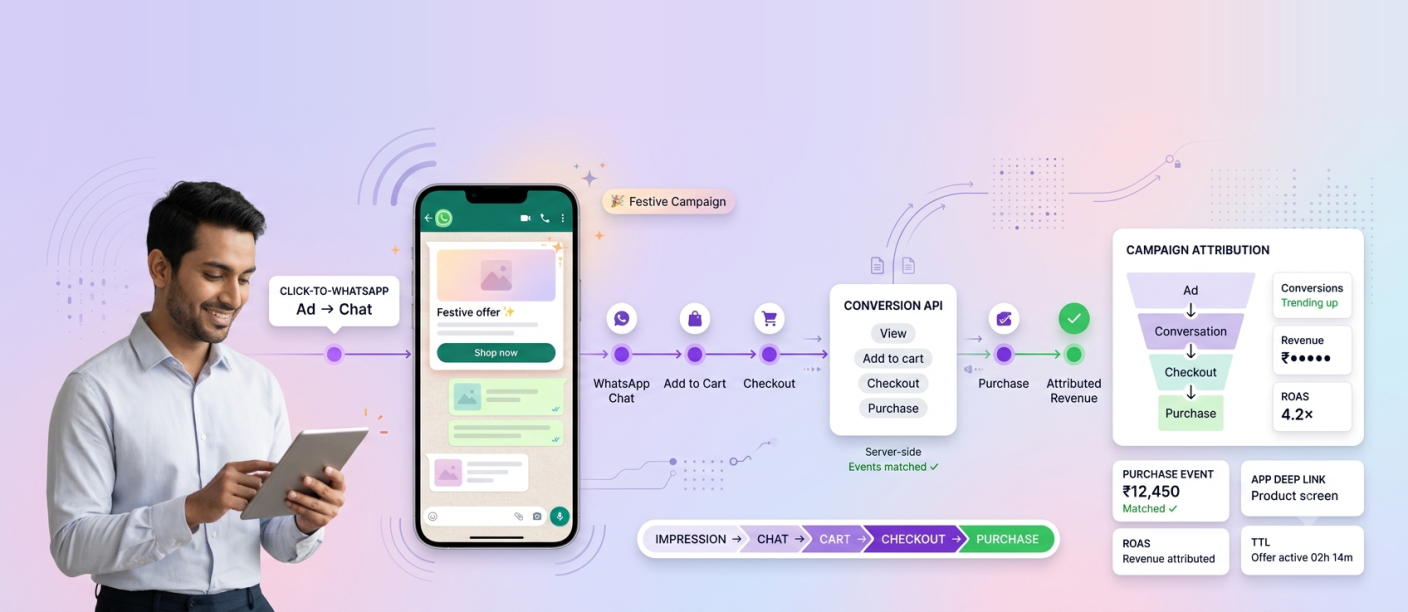
How Can WhatsApp Conversion API Improve Attribution During Festive Commerce Campaigns?
WhatsApp Conversion API improves festive campaign attribution by sending downstream business events, such as add-to-cart, checkout and purchase, back to...
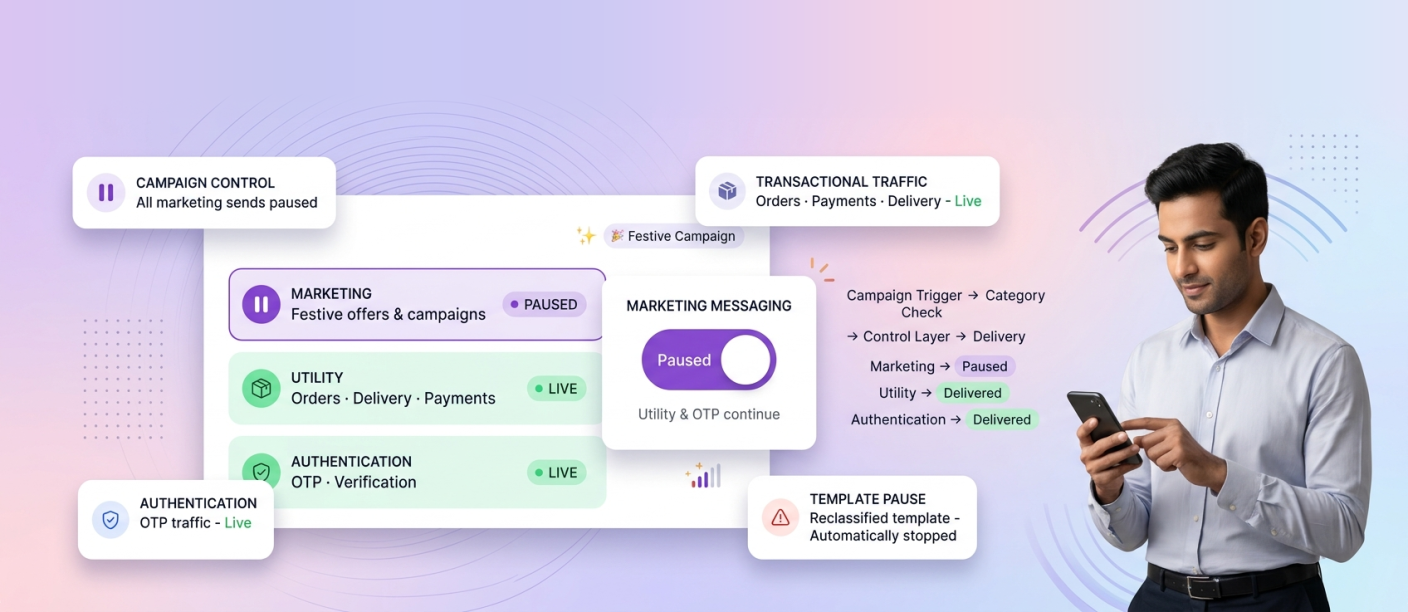
How Can Enterprises Control WhatsApp Marketing Sends During High-Volume Festive Campaigns?
Enterprises can control WhatsApp marketing messages during festive campaigns by using a single, project-wide switch that pauses all marketing sends...
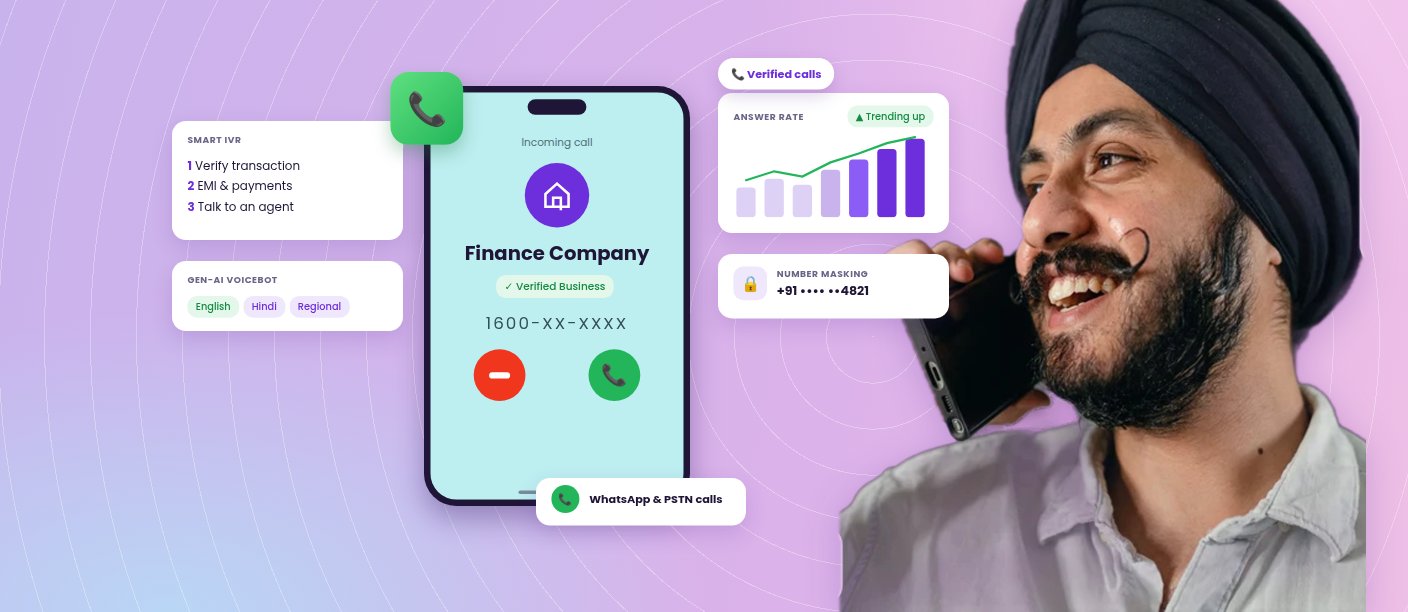
Enterprise Voice Solutions in India: The Complete Guide to Trusted Business Calling
Enterprise voice covers every call an organisation makes to or receives from its customers: service helplines, verification calls, payment reminders,...
Cloud Contact Center Solutions: The Complete Guide for Indian Enterprises
A cloud contact center, also described as Contact Center as a Service (CCaaS), delivers customer interaction management through the cloud:...
RCS Business Messaging in India: The Complete Enterprise Guide for 2026
Rich Communication Services (RCS) is the messaging standard that brings branded, interactive experiences to the native messaging inbox on a...
Enterprise SMS in India: The Complete Guide to Reliable, Compliant Messaging at Scale
Enterprise SMS is the messaging layer behind India's most critical customer communication. Payment confirmations, one-time passwords, account alerts, delivery updates...




 First Floor, Unit F-49, Sector-47, Spaze Boulevard, Gurugram, Haryana 122018